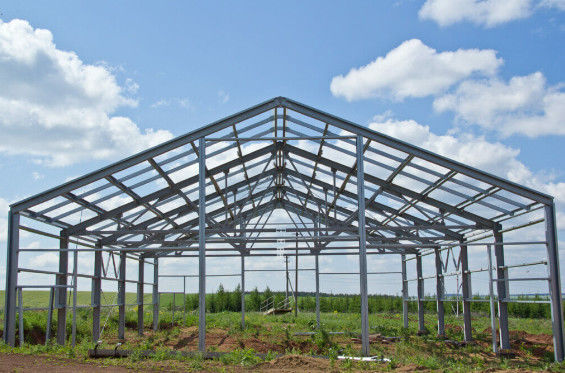
Industrial Steel Structure Prefabricated Metal Warehouse Storage Shed
Steel warehouses emerged in the early 20th century and have evolved from wooden and brick structures to modern steel frame buildings. With advancements in steel production technology, these warehouses have become larger, stronger, and more efficient for industrial storage needs.
Steel Warehouse Building Design
Steel warehouse buildings are customizable storage facilities designed to ensure functionality, safety, and economy. The architectural design must account for specific usage requirements and environmental factors.
Storage Requirements
Design considerations include the types of items stored, storage volume, storage cycles, and frequency of goods movement. Special requirements apply for food, chemicals, or heavy equipment storage, including potential loading platform needs.
Environmental Considerations
Climate conditions significantly impact building design. Cold regions require insulation, humid environments need anti-corrosion measures, and coastal areas demand enhanced structural strength for high wind resistance.
Space Utilization
Efficient warehouse layout is crucial for optimal space utilization. High steel structure warehouses can incorporate three-dimensional shelving, while large-volume operations benefit from column-free, large-span designs.
Steel's light weight and high strength characteristics enable the design of taller, larger, and more stable warehouse buildings. The material's plasticity and reliability support diverse design requirements while providing excellent wind and earthquake resistance.

Steel Warehouse Building Components
Steel structure warehouses consist of interconnected components using welding, bolting, or rivets:
Main Structure
Primary load-bearing elements including steel columns and beams made from Q345B steel plate or section steel.
Substructure
Supporting elements such as purlins, wall girts, and bracing made from thin-walled steel that transfer loads to the foundation.
Roof and Walls
Constructed from corrugated single color sheets and sandwich panels that overlap during installation to create a closed structure.
Bolts
Connection components that reduce on-site welding requirements, making installation easier and faster.
Steel Warehouse Building Fundamentals
Steel structure warehouses are widely used due to their simple construction, short cycles, low labor costs, and excellent resistance to wind and earthquakes while being energy-efficient and environmentally friendly.
Site Selection
Warehouses should be built on flat, open areas without water accumulation, preferably near roads, railways, or ports for efficient cargo transportation. A 1:1.5 length-to-width ratio provides optimal economy.
Load-Bearing Design
Design must account for various loads including rain, snow pressure, construction loads, maintenance loads, and strong winds to ensure stability under extreme conditions.
Lighting Layout
Proper lighting design saves energy while accommodating the nature of stored goods. Light-sensitive items require limited glass window installation.
Moisture Prevention in Steel Warehouses
Effective moisture control prevents goods from mold and deterioration while protecting the warehouse from rust and corrosion.
- Use moisture-proof materials like membranes and waterproof coatings
- Maintain good ventilation and control humidity with dehumidifiers if necessary
- Install shelving to keep goods elevated from the ground
- Use moisture-proof flooring or waterproof layers to prevent ground seepage
- Regularly inspect for leaks and perform timely repairs
Water Leakage Prevention
Preventing roof leaks is critical to avoid substantial property losses in warehouse operations.
- Proper roof slope design to prevent rainwater accumulation and improve drainage
- Install comprehensive drainage systems including rain troughs, gutters, and drainage pipes
- Select high-quality waterproof materials for roofs and walls
- Ensure proper sealing at all roof component joints
- Conduct regular maintenance and inspections to identify and repair potential leaks
Fire Prevention in Steel Structure Warehouses
Warehouse fires can cause significant economic losses, and steel structures require proper fire protection to prevent deformation or collapse.
- Apply fire-retardant coatings to steel surfaces to delay fire spread
- Install smoke detectors and fire alarm systems for early detection
- Equip with necessary fire-fighting equipment
- Arrange goods properly and maintain fire escape routes
- Conduct regular fire safety training for employees
Steel Warehouse vs Conventional Buildings
Steel structure warehouses offer significant economic advantages over conventional buildings. The prefabricated construction process minimizes delays, with all drilling, cutting, and welding completed in the factory before on-site assembly.
Assembly requires minimal technical expertise, reducing labor costs and saving time. The prefabricated steel materials provide high strength and easy assembly, enabling rapid construction compared to traditional methods.
Structural Design Considerations
Load-Bearing Capacity
Warehouses must support both stored goods and their own weight, requiring appropriate steel selection and connection methods based on size, height, and load requirements.
Earthquake Resistance
While steel structures naturally resist earthquakes, frequent seismic areas require specific structural frame designs according to local earthquake levels.
Fire Resistance
Steel is non-flammable but loses strength above 300°C. Structural design must include proper warehouse layout and application of fire-retardant coatings.
Economy
Portal steel frames suit spans under 30 meters, while trusses are more economical for larger spans. Insulated warehouses can use color steel plates with glass wool instead of composite panels to reduce material and transportation costs. Natural lighting panels further enhance efficiency.
Aesthetics
Structural design should meet aesthetic requirements including appearance, color, and shape considerations.
Key Advantages
Fast Delivery
Precast steel structures save up to one-third of construction time compared to concrete buildings. Factory fabrication enables quick on-site assembly and efficient transportation.
Sturdy Construction
High-strength steel ensures durability, structural integrity, and maintains building value for decades.
Wide Internal Space
Rigid steel frames support clear spans up to 60 meters without intermediate columns, providing operational flexibility and improved economic performance.
Easy Installation
Bolt-connected structures allow easy disassembly, transfer, and reassembly with minimal expense, offering strong mobility for reusable exhibition projects.


 Your message must be between 20-3,000 characters!